

Summary

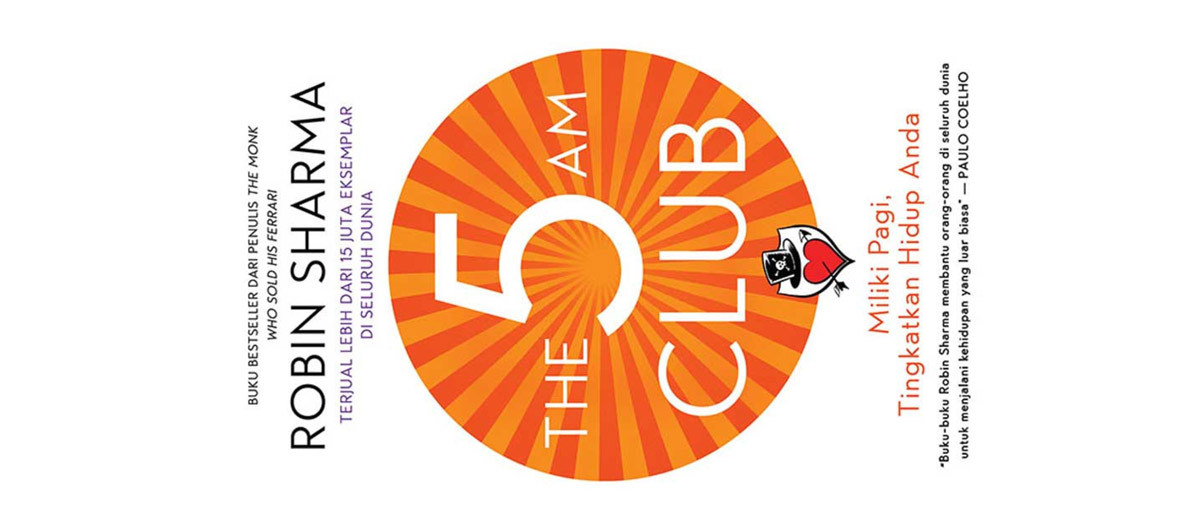
The 5 AM Club by Robin Sharma presents a morning routine designed to improve productivity, focus, and personal growth. The book follows a fictional narrative that introduces a method of waking up at 5 AM to dedicate the first hour of the day to exercise, reflection, and learning. This “Victory Hour” is structured to enhance mental clarity, physical health, and skill development. Through a mix of storytelling and guidance, the author emphasizes discipline, consistency, and mastering mornings as a foundation for success in life and work.

Waking up early gives you a quiet hour to build your body and mind before the world wakes up. This story shows you the specific routine billionaires use to beat distraction and win the day. You will learn to own your morning and elevate your life.

Own your morning. Elevate your life.

You lose focus because the world is built to distract you. When you wake up with the crowd, you inherit their stress. The brain needs a vacuum to function at peak levels, but modern life fills every gap with noise. You cannot do deep work while reacting to others. Great output requires deep rest and zero interference. If you want to lead the field, you must operate when the field is asleep. You buy your freedom with an early alarm. The hardest discipline yields the highest peace.

We spend years sharpening our minds while letting our bodies and emotions rust. We think we can outsmart burnout or think our way through sadness. This narrow focus builds a weak frame that snaps when the weight gets heavy. Enduring strength needs a wider base. You must tend to your physical health, emotional load, and inner peace with the same care you give your job. A table with one strong leg and three broken ones will still fall over.

Getting up early is useless if you waste time. This three-part split forces you to tune your body first. Sweat clears the brain, silence calms the heart, and learning builds the mind.

Most people start their day reacting to the world’s demands. Owning the first sixty minutes builds a shield against the noise. You win the battle in the dark so you can lead in the light.

We expect change to be smooth, but biology demands a tear-down first. Your brain fights new patterns until the old wires rot away. This friction is not a sign that you are weak. It is proof

that the hard work of rewiring has begun. You cannot rush this timeline. Most people quit right before the behavior becomes automatic because they mistake the pain of growth for a lack of talent. Mastery asks you to stay in the ring until the new action becomes easier to do than to skip.

Your brain has a manager called the prefrontal cortex. It handles stress, planning, and doubt. When it runs hot, it blocks creativity. During the early morning hours, this part of the mind temporarily shuts down to rest. We assume that great work requires intense thinking. Biology reveals that peak performance actually happens when you stop overanalyzing. By working while your logic center sleeps, you remove the fear that usually stops you from starting.

Your brain leaks energy when it switches tasks. Most people work in a state of constant interruption, which makes deep thought impossible. To reach peak output, you must physically block out every single distraction for a set time. Great work happens in silence. 

History shows that the most productive people treat their focus like a rare jewel. They

hide from the world to create things that change it. You must become hard to reach to be prolific.

We often treat our bodies like machines that run on endless fuel. But biology works in pulses. You push hard, then you must pull back to heal. Without the downtime, the uptime becomes weak and useless. Great work demands deep rest. If you skip the recovery, you kill the growth.

The pause is not a waste of time; it is where the magic happens. You earn your elite skills while you sleep and play.

We love the idea of a giant leap because it feels brave. It tricks the mind into thinking one huge 

can fix months of laziness. But nature ignores these bursts. A single hard run does not fix the heart, and one late night does not build a business. Big results happen when you refuse

to have a zero day. If you stack small wins, you use the law of growth. Time starts working for you. You do not have to be a genius; you just need to add one brick to the wall before you sleep.

Action in the present beats strategy for the future.

Your brain leaks energy every time a screen lights up. You cannot do deep work when you are always on call. This habit breaks your attention into tiny shards, leaving you with nothing but stress and half-done tasks.

History shows that masters hide from the crowd to create. If you want to build something that lasts, you must ruthlessly cut the digital cord. The best ideas only show up when the noise finally stops.

Most of us live forward, blindly adding days to a pile. We think we have time, so we delay the big things for urgent trifles. This drift kills dreams. But when you start at the end and look back, the fake tasks fall away.

Death is the only deadline that is real. It forces you to pick what matters. You stop working for a legacy you won’t see and start living a life you can be proud of right now. The clock is your friend, not your enemy.

Summary

Ikigai by Héctor García and Francesc Miralles delves into the Japanese philosophy of finding purpose, fulfillment, and joy in life. The authors draw from research and interviews with residents of a Japanese village known for its high life expectancy, revealing the secrets to a long and meaningful life. With practical advice and inspiring stories, the book guides readers to discover their own ikigai and live more purposefully and joyfully.

Published

December 4, 2018

Author

Robin Sharma

Key Features

Morning routine framework, Motivational storytelling, Productivity strategies

Genres

Self-help, Productivity, Personal development

  • Previous ProjectStolen Focus

  • Next ProjectThe Power of Now