

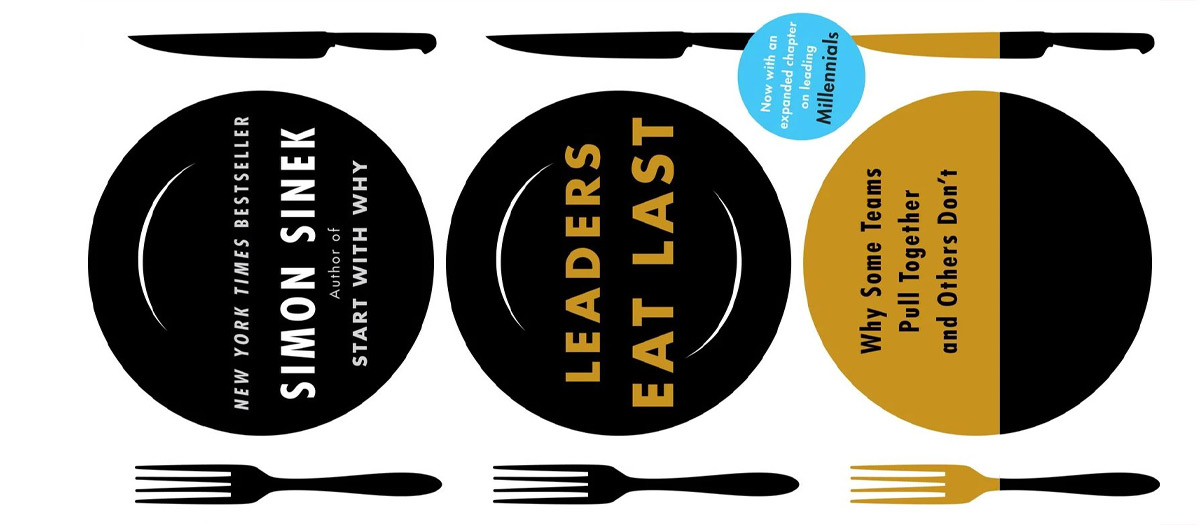
Summary

Why Some Teams Pull Together and Others Don’t

Your team is scared. They hide mistakes and fight each other for promotions. You can fix this. Leaders Eat Last shows you how to build a Circle of Safety. Shield your people from outside threats. Watch them work together, take risks, and win.

Build teams that trust you.

Build teams that trust you.

Our brains reward us for finding food and hitting marks. This chemical push feels great at first. Bosses get hooked on crossing off tasks and watching charts go up. They start managing

numbers instead of leading people. You destroy a team when you treat them as tools for your next high. A healthy workplace runs on trust, which takes time and care to grow. Fast wins fade fast, leaving everyone drained and hungry for something real.

When a manager absorbs the stress from above, the team stops worrying about survival. They drop their guard and start using their brainpower to solve actual problems. You buy their focus by paying the price of their safety.

Groups only thrive when the threat stays outside the walls. If you let danger leak into the room, your people will fight each other for the life rafts. A strong leader acts as a wall, taking the

hits so the crew can steer the ship.

We wire our brains to look out for threats. When the person in charge takes the first hit, the group stops worrying about their own safety. They put down their shields and focus entirely on the work in front of them. You buy trust with your own comfort. A title gives you the right to give

orders, but shared pain gives you a team that will fight for you. If you want people to care about the mission, you have to bleed first.

When you demand the final say on every choice, you train your crew to stop thinking. They wait for your nod instead of solving the problem in front of them. The instinct to guard your rank creates a slow, rigid machine. Great leaders push choices down to the floor. You give the folks doing the hard work the right to act. This builds a fast, smart group that can adapt to sudden shocks without waiting for a boss to tell them what to do.

You cannot buy trust with cheap perks or easy words. People only drop their guard when they see you risk your own time and sweat. The brain looks for hard proof of shared risk before it

allows a real bond to form. We follow those who take the first hit. A boss must give up their own shield to earn the right to guide the group. Without that raw cost, any promise of help is just empty noise.

When a group faces a tough threat, their brains release a strong bonding chemical. This reaction forces individuals to drop their selfish goals and rely on the person next to them.

The shared pain strips away titles and egos. Leaders often try to make work easy and smooth to keep people happy.

Comfort breeds weak groups. You forge a loyal team by taking them through a hard challenge and making sure everyone survives it together.

Leaders often try to buy loyalty with cheap perks and easy rewards. This backfires because humans are built to track physical effort and shared risk. When a boss trades their own time and comfort for the group, the brain releases chemicals that bind the team together.

Trust demands a hard toll. You earn the right to ask for hard work by taking on the heavy lifting yourself. If you refuse to spend your own energy on the people below you, they will guard their own backs at your expense.

We build tight bonds when we face a hard fight together. A safe room breeds lazy squabbles over small things. When a clear threat appears at the door, our brains release chemicals that

force us to look out for each other. A smart boss does not hide the hard facts from the crew. You build a strong team by pointing out the steep hill you all must climb. Shared risk turns a loud crowd of selfish workers into a single, unbreakable shield.

When bosses treat workers like parts in a machine, the whole group shuts down. Fear takes over the floor. People stop taking risks and start hiding their mistakes to save their own skin. The drive to build great things dies. You earn the right to lead by taking the first hit. A boss who steps in front of the blow buys the deep trust of the group. That safe space lets the team focus their energy on the outside fight, rather than watching their backs.

When a boss rewards bad acts just because they bring in cash, the whole group watches and learns. Good workers stop taking risks. They hoard their best ideas and build walls around their desks. Trust breaks down into fear. We often forget that culture runs on hard choices. If you hand power to someone who hurts the pack, you tell everyone else that teamwork holds zero worth. The group rots from the inside out, and your best people will simply pack up and leave.

When you place a screen between a boss and their crew, the mind stops seeing flesh and blood. Workers turn into dots on a chart. This gap shuts down our built-in care for others.

We can slash costs by half without breaking a sweat, because the math hides the pain.

Physical distance breaks our moral compass. If you make calls from a high tower, you will eventually crush the folks on the ground. You must force yourself to leave the office and stand next to the men and women who bear the heavy weight of your daily acts.

When you take charge, you step into a bright room with glass walls. Your team studies your face to guess if they are safe. A quick frown makes them freeze. A calm smile gives them room to breathe and work. We forget that our moods act like weather for the people we lead. You must watch your own face and tone before you try to fix the group. If you show fear, they will panic. If you show calm, they will fight hard.

Trust requires a physical sacrifice of time and energy. Quick rewards give a brief thrill, but they do not build deep bonds. When you sit down and help someone solve a hard problem, their brain registers that you gave up something you can never get back. This chemical reaction locks in a feeling of safety.

You must pay for loyalty with your own sweat. A leader who hides behind a screen and sends cash will always lose out to a leader who stands in the mud with the team. People stay when they know you will bleed for them.

A fierce workplace forces humans into survival mode. When leaders reward greed and punish care, the brain adapts to stay safe. Good workers will quickly drop their morals to secure

their paycheck and avoid the wrath of the boss. The culture shapes the choices. History proves that firing a few bad apples rarely saves a failing company. The rotting barrel infects the fresh fruit. Leaders buy the right to demand great work by building a safe space first. You get a team that acts with honor by building a system that rewards it.

Published

January 7, 2014

Author

Simon Sinek

Key Features

Leadership principles, Trust-building in teams, Organizational behavior insights

Genres

Business, Leadership, Self-help

  • Next ProjectCrucial Conversations