

Summary

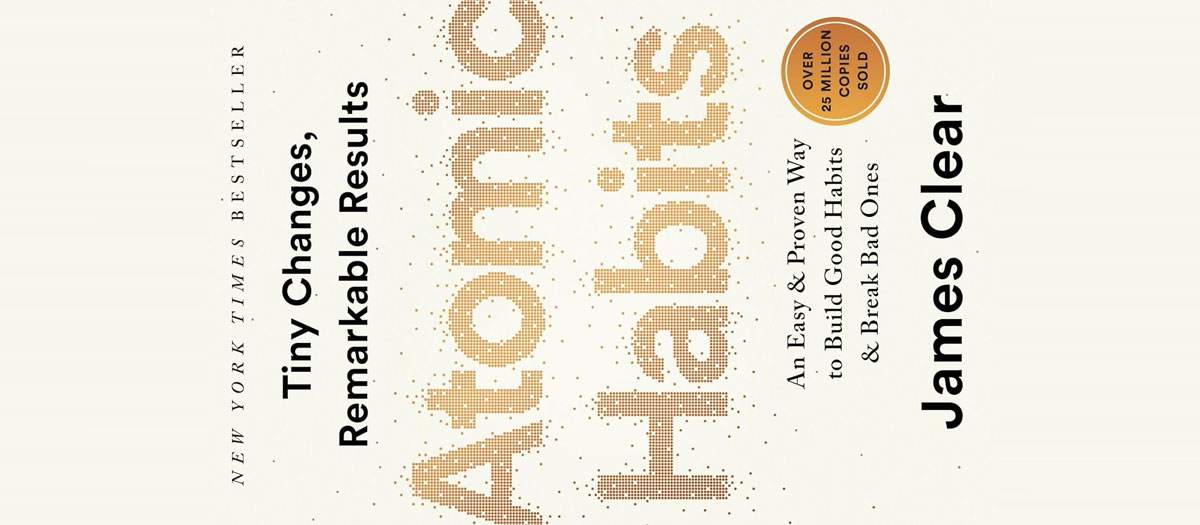
Atomic Habits by James Clear explains how small, consistent changes in behavior can lead to significant long-term results. The author presents a practical framework for building good habits and breaking bad ones, focusing on how habits are formed through cues, cravings, responses, and rewards. Using scientific research and real-world examples, the book shows how improving systems, rather than focusing only on goals, leads to lasting change and continuous personal improvement.

Ever feel stuck repeating the same patterns? In Atomic Habits, James Clear shows how tiny changes create massive progress by redesigning your environment and identity, not relying on discipline. Learn how small improvements compound into breakthroughs. Ready to unlock habits that stick for good?

Build Habits That Actually Stick

Making tiny, consistent improvements daily (just 1%) compounds dramatically over time.

Instead of seeking radical change, focus on being slightly better today than yesterday.

  • Start small and specific
  • Track your progress
  • Be consistent rather than perfect

As James Clear highlights: 1% better each day = 37x better after one year! This is the essence of the compound effect in personal growth.

Consistent small steps are the path to massive results.

Systems trump goals for lasting change. James Clear argues that focusing on systems over goals leads to more sustainable progress: 

  • Goals define the desired outcome but create a success/failure binary
  • Systems focus on the process that drives continuous improvement 

When you fall in love with the process, the results take care of themselves. By prioritizing systems, you shift from chasing fleeting achievements to building identity-based habits that create long-term transformation.

Fall to the level of your systems, not your goals.

True behavior change is identity change. In his seminal book, James Clear reveals that lasting habits form when they become part of your identity rather than just your to-do list.

The hierarchy of behavior change works in this order:

  • Most people focus on outcomes (what they want to achieve)
  • Better to focus on processes (what systems to implement)
  • Best to focus on identity (who you wish to become)

Every action you take is a vote for the type of person you believe you are. New identities emerge from proof of the evidence of small wins accumulated through consistent habits.

Atomic Habits are tiny, consistent behaviors that compound into remarkable results through the power of aggregation over time. The core principle is that habits are the compound interest of self-improvement. 

Three key insights define this approach:

  • Focus on systems: Design environments that make good habits inevitable
  • Identity-based change: Change what you believe about yourself, not just what you do
  • Small improvements: Tiny 1%improvements aggregate into massive advantages when maintained consistently

Breakthrough moments occur as a product of daily habits—a lagging measure of previous choices, not sudden transformations.

All habits proceed through the same 4-step pattern:

  1. Cue (or Reminder): The trigger that initiates behavior
  2. Craving: The motivational force behind every habit
  3. Response (or Routine): The actual habit you perform
  4. Reward: The benefit you gain from doing the habit

To change a habit, keep the same cue, provide the same reward but change the routine. Example: If you smoke when stressed (cue) to feel relaxed (reward), try deep breathing instead of smoking.

Any habit can be broken down into a feedback loop with four stages: cue, craving, response, and reward. Clear’s Four Laws of Behavior Change align with these stages:

To create a good habit:

  1. Make it obvious (cue): Design your environment to highlight cues
  2. Make it attractive (craving): Pair habits you need with habits you want
  3. Make it easy (response): Reduce friction for good habits
  4. Make it satisfying (reward): Give yourself immediate rewards 

To break bad habits, invert these laws: make it invisible, unattractive, difficult, and unsatisfying.

One of the best ways to build a new habit is to identify a current habit you already do each day and then stack your new behavior on top. This is called habit stacking.

The formula is: After [CURRENT HABIT], I will [NEW HABIT].

Examples:

  • After I pour my morning coffee, I will meditate for one minute.
  • After I sit down to dinner, I will say one thing I’m grateful for.

For best results: the trigger must be specific, the new habit should be small enough to do easily & the relationship should make logical sense.

Habit tracking is powerful and the most effective way to do it is with a simple method that tracks both completion and performance:

  • Mark an X for habits completed
  • Record relevant measurements (e.g., pushups performed, pages written)
  • Don’t break the chain. Try to keep your habit streak alive.

After the initial phase, missing once has little impact, but missing twice is the start of a new habit-the habit of not doing. As Clear notes: The first rule of compounding is to never interrupt it unnecessarily.

The Goldilocks Rule states that humans experience peak motivation when working on tasks that are right on the edge of their current abilities—not too hard, not too easy.

The greatest threat to success is not failure but boredom. As habits become automatic, they become less interesting and less satisfying. We get bored. It’s the ability to keep going when work isn’t exciting that makes the difference.

Professionals stick to the schedule; amateurs let life get in the way.

Breakthrough moments are often the result of many previous actions, which build up potential energy that is released at once:

  • Cancer spends 80% of its life invisible before detection
  • An entrepreneur works for years before becoming an overnight success

This the Plateau of Latent Potential—the valley of disappointment where people feel discouraged by the lack of results and give up. They expect linear progress but the reality is that results lag behind behaviors, sometimes for a long time.

Habit bundling is pairing an action you want to do with an action you need to do.

The formula is: After [CURRENT HABIT], I will [HABIT I NEED]. After [HABIT I NEED], I will [HABIT I WANT].

For example: After I brew my morning coffee, I will do 10 pushups. After I do 10 pushups, I will drink my coffee.

This strategy works because it:

  1. Leverages the motivational power of temptation
  2. Uses existing routines as triggers
  3. Creates a clear reward for completing difficult habits

The Diderot Effect states that obtaining a new possession often creates a spiral of consumption that leads to additional purchases. Applied to habits, the Diderot Effect reveals their interconnectedness:

  • Fixing your diet may inspire you to exercise more
  • One bad habit can trigger others (having one cigarette, then another)

You can overcome it by setting self-imposed limits before any activity, by focusing on quality over quantity and considering the full ownership cost of adopting a new habit.

One of the most effective things you can do to build better habits is to join a culture where your desired behavior is the normal behavior. We imitate the habits of three groups:

  1. The close: Family and friends
  2. The many: The tribe or wider group
  3. The powerful: Those with status and prestige

The culture you surround yourself with determines what behaviors seem attractive to you. We tend to adopt habits that are praised and approved of by our culture because we have a strong desire to fit in and belong.

Published

October 16, 2018

Author

James Clear

Key Features

Habit-building framework, Scientific research, Actionable systems for change

Genres

Self-help, Productivity, Psychology

  • Previous ProjectThe Courage to Be Disliked

  • Next ProjectThe Art of Thinking Clearly