

Summary

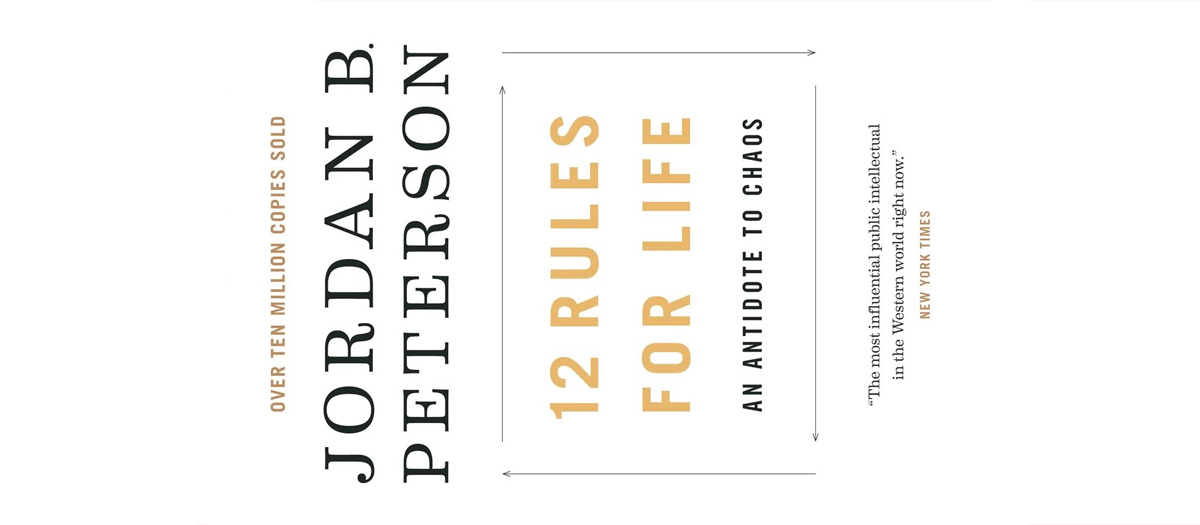
An Antidote to chaos. You feel overwhelmed by a world that seems to demand too much. This book hands you a toolkit to fight chaos and build a life of meaning. It uses biology and ancient myths to show why standing up straight and telling the truth fixes your reality.

How to Build Order From Chaos

You feel overwhelmed by a world that seems to demand too much. This book hands you a toolkit to fight chaos and build a life of meaning. It uses biology and ancient myths to show why standing up straight and telling the truth fixes your reality.

Your posture sends a loud signal to your brain. If you slump, you tell your internal systems that you are at the bottom of the pile. Your body reacts by dropping chemicals that regulate mood. You feel weaker, so you shrink more. It is a biological spiral into chaos.

You snap the loop by taking up space. Standing tall exposes your chest and throat to the world. This voluntary risk forces your mind to switch from fear to focus. The world treats you like a victor only when you look like one.

We nurse sick pets and help friends move, yet we let our own health rot. This happens because we know our own sins too well. We see our reflection and see a villain who deserves to suffer, so we withhold the care we freely give to others. You must detach from your self-judgment to survive. View your life as a separate project you are tasked to manage. When you treat your body like a stranger you are paid to protect, you finally do the work required to stay alive.

We often mix up loyalty with being a hostage. You stay with people who drag you down because you feel you owe them. But this bond is not love. It is a deal to stay stuck together. They need you to fail so they do not have to try. You must pick your circle with care. A real friend is someone who wants the best for you, not someone who is okay with your worst. If you cannot share your good news with them, they are not on your team. They are in your way.

You break your heart when you measure your life against a stranger’s best day. Their road has hidden bumps you cannot see. The only fair test is to look at who you were a year ago.

We build a strong life by stacking small wins. When you try to beat your past self, the world stops being a judge. You take hold of the only thing you can truly change.

Parents often mix up love with giving in. They fear that saying “no” breaks the bond, so they let small fits slide. This teaches the child that loud feelings override rules. It leaves them unready for a world that does not care about their mood. You are the first map of the world your child sees. If you fail to correct them with care, society will correct them with coldness later. Real love means teaching a kid how to be someone that other people want to include in the game.

We often mistake shouting for leading. It feels good to judge the world because it hides the mess in our own sink. We try to fix the complex things outside because we are too scared to face the simple, broken things inside. 

You cannot build a strong tower on a swamp. Influence starts at your feet, not your mouth. When you stop doing the things you know are wrong, your eyes clear up. You earn the right to lead only after you clean up your own act.

We are wired to grab the low-hanging fruit. It solves the hunger pangs immediately and requires zero effort. But treating every problem with a bandage instead of surgery leaves the wound to fester underneath the skin. You build a sturdy life by delaying the reward. Every time you choose the difficult, honest path over the easy excuse, you place a brick in a foundation that chaos cannot shake.

When you twist your words to avoid a fight, you blind yourself. You do not fix the threat; you just hide it in the fog. This creates a debt that grows every day. The world is hard enough to navigate without painting over the warning signs.

Truth acts as your only reliable compass. If you warp the map to feel safe, you will eventually walk off a cliff. Strong people accept the sharp edges of facts because that is the only ground solid enough to build a life on. 

You stop growing the moment you think you understand. Your brain loves to sort people and problems quickly to save energy. This speed creates a blind spot where you ignore any fact that fights your first thought. You defend your map instead of looking at the ground.

Growth demands the death of your current views. When you listen to someone, you must treat them as a guide to a place you have not visited. Smart people talk to risk their own ideas. This allows you to swap old errors for new truths.

We often treat vague worry like a fog we can wait out. But the brain treats the unknown as a hunter. When you refuse to define a threat, your mind paints the worst picture, turning a small issue into a disaster. Sharp speech acts like a cage. By saying exactly what is wrong, you put walls around the mess. A defined problem is a puzzle you can solve, but an undefined one is infinite. You strip the beast of its power when you speak.

We wrap our lives in soft foam to block out pain. We think that by removing every sharp edge and potential fall, we are preserving life. But this safety is deceptive. When you eliminate the chance of failure, you also kill the feedback loop that builds skill. Grit does not grow in a sterile room. It requires the stress of a heavy load or a high climb. If you shield yourself or others from every bruise, you create a weakness that breaks under the slightest pressure. You must invite a little chaos to build a lot of order.

Suffering grows when you try to carry the weight of your whole life at once. The human mind breaks under the load of an infinite future filled with pain. You regain control by shrinking your horizon to the immediate moment in front of you. Resilience is built in these small pauses. When the road is too dark to see the end, you stop looking for the horizon. You look for the small, good things near your feet. This is how you endure the unendurable without breaking apart.

Published

January 16, 2018

Author

Jordan B. Peterson

Key Features

Life principles, Responsibility-focused guidance, Psychological and mythological insights

Genres

Self-help, Psychology, Philosophy

  • Previous ProjectCrucial Conversations

  • Next ProjectThinking Fast and Slow